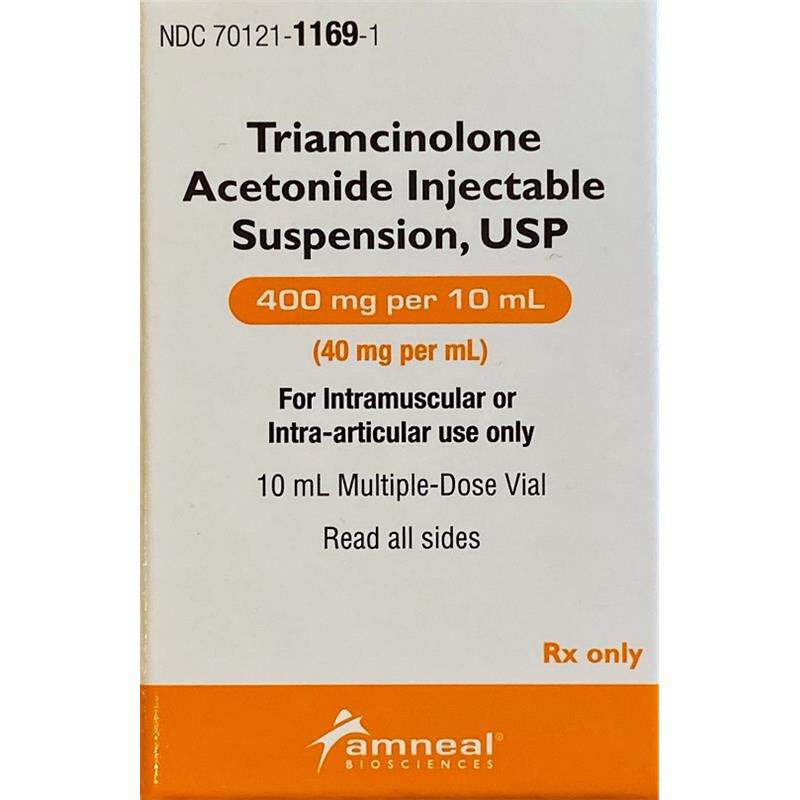
Dosage and Administration: Intramuscular or subcutaneous: Dogs and Cats: The dose is a single injection of 0.05 mg to 0.1 mg triamcinolone acetonide per pound of body weight in inflammatory or allergic disorders and 0.1 mg per pound of body weight in dermatologic disorders. Remission of symptoms, if not permanent, usually lasts 7 to 15 days. After this time, if symptoms recur, the dose may be repeated or oral corticosteroid therapy may be instituted.
Horses: The dose is 0.01 mg to 0.02 mg triamcinolone acetonide per pound of body weight as a single injection; the usual range is 12 mg to 20 mg.
Intralesional: Dogs and Cats: The usual intralesional dosage is 1.2 mg to 1.8 mg triamcinolone acetonide. Injections should be circumscribed around the lesion in various sites to insure adequate distribution of the dose. Injections should be spaced 0.5 cm to 2.5 cm apart, depending on the size of the lesion. The spacing of the dose also reduces pain and/or pressure necrosis.
The dose injected at any one site should not exceed 0.6 mg to minimize local tissue intolerance and atrophy, and should be made well into the cutis to prevent subsequent rupture of the epidermis. When treating dogs and cats with multiple lesions, do not exceed a total dose of 6 mg. Repeat courses of treatment may be administered if necessary.
It is preferable to employ a tuberculin syringe with a small bore needle (23-25 gauge) for accuracy of dose measurement and ease of administration.
Intra-articular and intrasynovial: Dogs, Cats and Horses: The dose for intra-articular or intrasynovial administration is dependent on the size of the joint to be treated and on the severity of symptoms. A single injection of 1 mg to 3 mg triamcinolone acetonide for cats and dogs and 6 mg to 18 mg for horses is recommended. After three or four days, injections may be repeated, depending on the severity of symptoms and the clinical response. If initial results are inadequate or too transient, dosage may be increased, but the recommended dose should not be exceeded.
Routine aseptic preparation of the area should be made prior to all intra-articular injections. A thorough understanding of the pertinent anatomic relationships is essential. The inadvertent administration of the corticosteroid into the soft tissues surrounding a joint is not harmful, but is the most common cause of failure to achieve the desired local results.
Following intra-articular administration, pain and other local symptoms may continue for a short time before effective relief is obtained, but an increase in joint discomfort is rare. A marked increase in pain accompanied by local swelling, further restriction of joint motion, fever and malaise are suggestive of a septic arthritis. If these complications should occur and the diagnosis of sepsis is confirmed, antimicrobial therapy should be instituted immediately and continued until all evidence of infection has disappeared.